Buy seekrankheit.eu ?
We are moving the project
seekrankheit.eu .
Are you interested in purchasing the domain
seekrankheit.eu ?
domain@kv-gmbh.de · 0541-91531010
Buy seekrankheit.eu ?
What is rotational motion in physics?
Rotational motion in physics refers to the movement of an object around an axis. This type of motion occurs when an object rotates or spins around a fixed point, rather than moving in a straight line. Rotational motion is characterized by properties such as angular velocity, angular acceleration, and moment of inertia, and it is commonly observed in phenomena such as the spinning of a wheel, the rotation of the Earth, or the movement of a gyroscope. Understanding rotational motion is important in fields such as engineering, mechanics, and astronomy. **
What are vectors in rotational motion?
In rotational motion, vectors are quantities that have both magnitude and direction and are used to represent physical quantities such as angular velocity, angular acceleration, and torque. These vectors help describe the rotational motion of an object by indicating the direction of rotation and the rate at which the object is rotating. Vectors in rotational motion follow the same rules of vector addition and subtraction as in linear motion, allowing for the calculation of net torque and angular momentum in a system. **


Similar search terms for Rotational
Top-Angebote
Products related to Rotational:
-
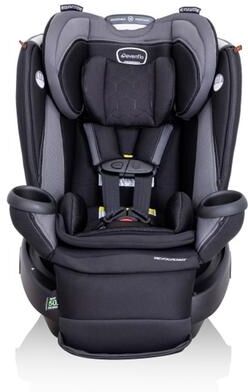
Evenflo Revolve180 LiteMax NXT Rotational Infant Car Seat with SensorySoothe - FlintThe Evenflo Revolve180TM LiteMaxTM NXT Rotational Infant Car Seat with SensorySootheTM technology has it all. For infants weighing 3-30 lb (15.7-32 in.), this car seat offers one-hand, 180 rotation for easy in and out. SensorySoothe technology...379,99 $*Shipping: 0,00 $Secure redirect to the provider
-
Evenflo Gold Revolve360 Extend All-in-One Rotational Car Seat with SensorSafeThe revolution just got extended! The Evenflo® Gold Revolve360™ Extend All-in-One Rotational Car Seat with SensorSafe™ offers the extended security of rear-facing all the way up to 50 lb.469,99 $*Shipping: 0,00 $Secure redirect to the provider
-
Evenflo Revolve360 Extend All-in-One Rotational Car Seat with Quick Clean CoverThe revolution just got extended! The Evenflo® Revolve360™ Extend™ All-in-One Rotational Car Seat with Quick Clean Cover offers the extended security of rear-facing all the way up to 50 lb.439,99 $*Shipping: 0,00 $Secure redirect to the provider
-
Evenflo GOLD SensorSafe Revolve360 Extend Rotational All-In-One Convertible Car Seat - Onyx BlackThe revolution just got extended! The Evenflo Gold Revolve360 Extend All-in-One Rotational Car Seat with SensorSafe offers the extended security of rear-facing all the way up to 50 lb. Child safety experts say the longer your child remains...322,49 $*Shipping: 0,00 $Secure redirect to the provider



-
What is a rotational motion in mathematics?
In mathematics, rotational motion refers to the movement of an object around a fixed point or axis. This type of motion involves a circular path where the object rotates or spins around a center point. Rotational motion is often described using concepts such as angular velocity, angular acceleration, and moment of inertia. It is commonly studied in fields such as physics, engineering, and geometry to analyze the behavior of rotating objects. **
-
What are the symptoms of disorientation, dizziness, and nausea?
Symptoms of disorientation can include confusion, feeling lost, and difficulty concentrating. Dizziness may manifest as a spinning sensation, lightheadedness, or unsteadiness. Nausea often presents as a feeling of queasiness, an urge to vomit, or actual vomiting. These symptoms can be caused by various factors such as dehydration, low blood sugar, inner ear problems, or infections. **
-
What is the difference between circular and rotational motion?
Circular motion refers to the movement of an object along a circular path, while rotational motion refers to the spinning or turning of an object around an axis. In circular motion, the object moves in a circular path, while in rotational motion, the object spins around a fixed point. Circular motion can be seen in the movement of a car around a roundabout, while rotational motion can be seen in the spinning of a wheel or the turning of a screw. Both types of motion involve the movement of an object, but they differ in the path and direction of the movement. **
-
What is the relationship of Newton's law of motion in rotational motion?
Newton's law of motion can be applied to rotational motion through the concept of torque, which is the rotational equivalent of force. The first law states that an object will remain at rest or in uniform motion unless acted upon by a net external torque, similar to how an object will remain at rest or in uniform motion unless acted upon by a net external force. The second law, F = ma, can be translated to τ = Iα, where τ is the torque, I is the moment of inertia, and α is the angular acceleration. The third law, which states that for every action there is an equal and opposite reaction, can also be applied to rotational motion. **


What is the difference between rotational motion and circular motion in physics?
Rotational motion refers to the movement of an object around its own axis, such as the spinning of a wheel or the rotation of the Earth. Circular motion, on the other hand, refers to the movement of an object around a fixed point, such as the orbit of a planet around the sun. In rotational motion, the axis of rotation remains fixed, while in circular motion, the object moves around a fixed point. Both types of motion involve the concept of angular velocity and centripetal force, but they occur in different contexts and have distinct characteristics. **
How do you couple forces for rotational motion in mechanics?
In mechanics, forces for rotational motion are coupled through the concept of torque. Torque is the rotational equivalent of force and is the product of the force applied and the distance from the axis of rotation. When multiple forces act on an object, their torques are added together to determine the net torque. This net torque then determines the object's rotational motion, such as its angular acceleration or the change in its angular velocity. The principle of torque coupling allows us to analyze and predict the rotational behavior of objects under the influence of multiple forces. **
Top-Angebote
Products related to Rotational:
-
Portable190 PPD Dehumidifier w/ Pump Rotational Molded DehumidifierEffectively manage humidity levels with our 190 PPD commercial dehumidifier! This 190 PPD high-efficiency industrial dehumidifier is ideal for tackling humidity in basements, crawl spaces, and areas affected by water damage.873,49 $*Shipping: 0,00 $Secure redirect to the provider
-
Evenflo Revolve180 LiteMax NXT Rotational Infant Car Seat with SensorySoothe - FlintThe Evenflo Revolve180TM LiteMaxTM NXT Rotational Infant Car Seat with SensorySootheTM technology has it all. For infants weighing 3-30 lb (15.7-32 in.), this car seat offers one-hand, 180 rotation for easy in and out. SensorySoothe technology...379,99 $*Shipping: 0,00 $Secure redirect to the provider
-
Evenflo Gold Revolve360 Extend All-in-One Rotational Car Seat with SensorSafeThe revolution just got extended! The Evenflo® Gold Revolve360™ Extend All-in-One Rotational Car Seat with SensorSafe™ offers the extended security of rear-facing all the way up to 50 lb.469,99 $*Shipping: 0,00 $Secure redirect to the provider
-
What is rotational motion in physics?
Rotational motion in physics refers to the movement of an object around an axis. This type of motion occurs when an object rotates or spins around a fixed point, rather than moving in a straight line. Rotational motion is characterized by properties such as angular velocity, angular acceleration, and moment of inertia, and it is commonly observed in phenomena such as the spinning of a wheel, the rotation of the Earth, or the movement of a gyroscope. Understanding rotational motion is important in fields such as engineering, mechanics, and astronomy. **
-
What are vectors in rotational motion?
In rotational motion, vectors are quantities that have both magnitude and direction and are used to represent physical quantities such as angular velocity, angular acceleration, and torque. These vectors help describe the rotational motion of an object by indicating the direction of rotation and the rate at which the object is rotating. Vectors in rotational motion follow the same rules of vector addition and subtraction as in linear motion, allowing for the calculation of net torque and angular momentum in a system. **
-
What is a rotational motion in mathematics?
In mathematics, rotational motion refers to the movement of an object around a fixed point or axis. This type of motion involves a circular path where the object rotates or spins around a center point. Rotational motion is often described using concepts such as angular velocity, angular acceleration, and moment of inertia. It is commonly studied in fields such as physics, engineering, and geometry to analyze the behavior of rotating objects. **
-
What are the symptoms of disorientation, dizziness, and nausea?
Symptoms of disorientation can include confusion, feeling lost, and difficulty concentrating. Dizziness may manifest as a spinning sensation, lightheadedness, or unsteadiness. Nausea often presents as a feeling of queasiness, an urge to vomit, or actual vomiting. These symptoms can be caused by various factors such as dehydration, low blood sugar, inner ear problems, or infections. **
Similar search terms for Rotational
-
Evenflo Revolve360 Extend All-in-One Rotational Car Seat with Quick Clean CoverThe revolution just got extended! The Evenflo® Revolve360™ Extend™ All-in-One Rotational Car Seat with Quick Clean Cover offers the extended security of rear-facing all the way up to 50 lb.439,99 $*Shipping: 0,00 $Secure redirect to the provider
-
Evenflo GOLD SensorSafe Revolve360 Extend Rotational All-In-One Convertible Car Seat - Onyx BlackThe revolution just got extended! The Evenflo Gold Revolve360 Extend All-in-One Rotational Car Seat with SensorSafe offers the extended security of rear-facing all the way up to 50 lb. Child safety experts say the longer your child remains...322,49 $*Shipping: 0,00 $Secure redirect to the provider
-
Evenflo Revolve180 LiteMax NXT Rotational Infant Car Seat with SensorySoothe - TopazThe Evenflo Revolve180TM LiteMaxTM NXT Rotational Infant Car Seat with SensorySootheTM technology has it all. For infants weighing 3-30 lb (15.7-32 in.), this car seat offers one-hand, 180 rotation for easy in and out. SensorySoothe technology...379,99 $*Shipping: 0,00 $Secure redirect to the provider
-
Evenflo Revolve180 LiteMax NXT Rotational Infant Car Seat with SensorySoothe - QuartzThe Evenflo Revolve180TM LiteMaxTM NXT Rotational Infant Car Seat with SensorySootheTM technology has it all. For infants weighing 3-30 lb (15.7-32 in.), this car seat offers one-hand, 180 rotation for easy in and out. SensorySoothe technology...379,99 $*Shipping: 0,00 $Secure redirect to the provider
-
What is the difference between circular and rotational motion?
Circular motion refers to the movement of an object along a circular path, while rotational motion refers to the spinning or turning of an object around an axis. In circular motion, the object moves in a circular path, while in rotational motion, the object spins around a fixed point. Circular motion can be seen in the movement of a car around a roundabout, while rotational motion can be seen in the spinning of a wheel or the turning of a screw. Both types of motion involve the movement of an object, but they differ in the path and direction of the movement. **
-
What is the relationship of Newton's law of motion in rotational motion?
Newton's law of motion can be applied to rotational motion through the concept of torque, which is the rotational equivalent of force. The first law states that an object will remain at rest or in uniform motion unless acted upon by a net external torque, similar to how an object will remain at rest or in uniform motion unless acted upon by a net external force. The second law, F = ma, can be translated to τ = Iα, where τ is the torque, I is the moment of inertia, and α is the angular acceleration. The third law, which states that for every action there is an equal and opposite reaction, can also be applied to rotational motion. **
-
What is the difference between rotational motion and circular motion in physics?
Rotational motion refers to the movement of an object around its own axis, such as the spinning of a wheel or the rotation of the Earth. Circular motion, on the other hand, refers to the movement of an object around a fixed point, such as the orbit of a planet around the sun. In rotational motion, the axis of rotation remains fixed, while in circular motion, the object moves around a fixed point. Both types of motion involve the concept of angular velocity and centripetal force, but they occur in different contexts and have distinct characteristics. **
-
How do you couple forces for rotational motion in mechanics?
In mechanics, forces for rotational motion are coupled through the concept of torque. Torque is the rotational equivalent of force and is the product of the force applied and the distance from the axis of rotation. When multiple forces act on an object, their torques are added together to determine the net torque. This net torque then determines the object's rotational motion, such as its angular acceleration or the change in its angular velocity. The principle of torque coupling allows us to analyze and predict the rotational behavior of objects under the influence of multiple forces. **
* All prices are inclusive of VAT and, if applicable, plus shipping costs. The offer information is based on the details provided by the respective shop and is updated through automated processes. Real-time updates do not occur, so deviations can occur in individual cases. ** Note: Parts of this content were created by AI.